


Reading does not start with letters or words. It begins with a brain that is ready to listen, organize, and engage. Learning is a whole-body process, influenced by how the nervous system is functioning long before a page is turned.
Regulation always comes before skill. When someone feels anxious or overwhelmed, the brain redirects its energy toward survival rather than learning. The same pathways that help us stay alert and manage emotion also control attention and language.
“When the body is calm, the brain can listen, and when it listens, it can learn.”
Attention and emotional regulation shape how the brain engages with reading, influencing focus, comprehension, and motivation.
Reading and the Brain Series with Alan Heath
In the first two parts of this series, How Listening Shapes the Path to Literacy and Rhythm and Movement, we explored how listening and rhythm prepare the brain for fluent reading. In this final article, we turn to the emotional foundation that makes it all possible: Attention and Emotional Connection. These often unseen elements allow the brain to connect sound and meaning, transform listening into language, and find expression through reading.
As Alan Heath explained during the “Reading and the Brain” webinar, “A calm body creates a listening brain.”
Preparing the Brain to Learn

The Listening Program®, a neuroscience-based music listening therapy, helps strengthen this foundation by supporting the body’s natural rhythms and calming the nervous system. Through beautiful, enjoyable, neuroacoustically modified music, it helps listeners shift from stress to focus and from distraction to engagement. The result is a brain that is ready to learn and a reader who can truly understand.
The Emotional Foundation of Reading
Learning begins with the body’s state of balance. The nervous system constantly monitors whether we are safe, threatened, or uncertain. When we feel secure, the body relaxes, and the brain shifts into a focused state where it can explore, sustain attention, and connect ideas. When we feel anxious or overstimulated, the body releases stress hormones that narrow attention and redirect energy toward protection rather than learning.
The Autonomic Nervous System at Work

This balance is managed by the autonomic nervous system, which includes the sympathetic branch that prepares the body for action and the parasympathetic branch that allows rest and restoration. Alan explained that these systems influence learning every moment a child or adult sits down to read. When the body remains in a mild state of stress, the brain’s higher functions, such as memory, attention, and comprehension, are disrupted.
A Listener’s Story

Maddie is a twelve-year-old junior high student with an autism diagnosis. For several years, her parents supported her learning through homeschooling, knowing she needed a slower pace and more emotional support to stay regulated and engaged.
When they enrolled her in public school, they hoped the added structure would help. Instead, it became clear how overwhelming reading felt for Maddie. She showed up every day, but reading-based work often stalled before it could begin. Writing broke down. Frustration rose. Her confidence faded.
Her parents were not worried about effort. They were worried about access. Reading itself seemed out of reach, not because Maddie did not want to learn, but because her nervous system could not stay settled long enough to focus or engage.
They were seeing things like:
• Writing that stayed at the level of scribbles
• Reading tasks that quickly led to shutdown or emotional outbursts
• Little sense of confidence when it came to reading or schoolwork
With support from her academic coach, Karen Brinkley, Maddie began The Listening Program, starting with TLP Spectrum, the most gentle TLP core program. At first, the changes were subtle. Maddie was calmer. More focused and present. Less reactive. Reading itself had not changed yet, but her body had.
Within about five months, something important shifted. Reading stopped feeling like something her body had to fight against. Maddie could stay with reading tasks longer without tension or fatigue, write clear sentences using familiar words, and pause to check her understanding instead of shutting down when something was new.
“The most meaningful change was not just what Maddie could do. It was how reading felt. Her brain was no longer fighting to stay regulated. Learning finally had room to happen.”
Maddie’s parents felt a deep sense of relief as they watched her begin passing her subjects at school and showing curiosity, creativity, and confidence. For the first time, she explored art and expressed herself through painting and hands-on projects. They now see a child who is more emotionally available and open to learning.
Maddie’s story offers an important reminder for families who feel stuck. Reading does not simply improve because a child tries harder; it improves because they are finally ready to learn.
Regulation Is the Groundwork for Reading
In calm, rhythmic states, the prefrontal cortex, which supports planning and language, works in coordination with sensory regions that manage hearing, vision, and movement. When regulation is lost, these same systems fall out of coordination. What follows is what many parents and teachers recognize right away.
• A child who starts strong but quickly loses focus
• Avoidance of reading, homework, or classroom tasks
• Frustration that seems out of proportion to the work
• Shutting down, melting down, or giving up easily
• Inconsistent performance from one day to the next
Why Calm Comes Before Skill
Alan often says that calm regulation always comes before skill. It is the groundwork that allows the brain to organize itself before it can perform. Once the nervous system finds its balance, learning follows almost automatically. This is why he places so much emphasis on creating conditions of safety and focus. Reading is not possible in a brain that feels under threat.
Understanding the connection between emotion and learning changes how we support reading. Rather than starting with more practice or more pressure, we focus first on helping the brain reach a state of regulation. Then, the body begins to settle. Breathing slows. Posture softens. The nervous system no longer feels on alert.
As regulation improves, attention becomes more available. The eyes track words more smoothly. The ears distinguish sounds more clearly. Language has space to organize and begin to flow.
Listening as an Organizing Process
Alan often explains that listening is not just about hearing sounds. It is how the nervous system organizes what we take in from the world. When the body is calm, the brain can process sound in sequence, allowing rhythm and tone to turn into meaning. When the body is tense, even familiar words can feel scattered and hard to follow.
This is why regulation is not an optional support for reading. It is the foundation. A calm, rhythmic nervous system prepares the auditory system to interpret language and remain engaged with it accurately. This is the state that The Listening Program is designed to support, using neuroacoustically modified music to guide the listener toward balance, focus, and readiness to learn.

The Listening Program and the Auditory Pathways
During the Reading and the Brain webinar, Alan Heath described listening as the bridge between the body and the mind. Sound is one of the primary ways the nervous system organizes itself. How the brain receives and responds to sound shapes whether we feel calm and engaged or tense and withdrawn. This matters because learning, including reading, depends on the nervous system’s readiness to take in information.
How the Brain Responds to Sound
Sound moves through the brain in more than one way. As we listen, the brain is not only interpreting sound and language, it is also deciding how that sound feels in the body. These processes happen at the same time and shape whether listening supports focus or triggers overwhelm.
For reading to be possible, both processes need to work together.
Two Auditory Pathways, One Learning System
The brain relies on two distinct auditory pathways. Each plays a different role, but both are essential for reading. Together, they shape how reading is experienced, not just cognitively but also physically and emotionally.
| Classical Auditory Pathway | Non-Classical Auditory Pathway |
|---|---|
| Helps the brain understand sound and language | Helps the body decide how sound feels |
| Carries sound from the ear through the brainstem to the auditory cortex | Connects sound directly to areas involved in emotion and alertness |
| Supports recognizing words, following sentences, and tracking rhythm and tone | Answers questions like “Is this sound safe?” and “Do I need to stay on guard?” |
| Builds sequencing and timing skills needed for reading fluency | Regulates arousal, attention, and emotional readiness |
| When working well, reading feels organized and manageable | When overactive, even ordinary sounds can feel stressful |
| Supports comprehension and sustained attention | Can narrow attention and make reading feel overwhelming |
For reading to be possible, these two systems must work together. When the body feels safe, the brain can focus on meaning.
Bringing the System Back Into Balance
It’s also important to understand how The Listening Program® is used.
TLP is not used during reading or schoolwork. Listening happens at a separate time, often while resting, drawing, or doing something quiet. The purpose is not to multitask or train reading directly, but to prepare the brain.
The therapeutic music supports regulation and organization first. Then, when the child later sits down to read, their nervous system is calmer, attention is more available, and language is easier to hold onto. Reading happens without the music playing.
This is part of what makes The Listening Program different from simply putting on background music. It is not about distraction or accompaniment. It is about changing the brain’s readiness so that learning feels more accessible afterward.
Parents often notice that reading goes better later in the day, or in the days and weeks that follow, not because their child practiced harder, but because the brain feels more settled and organized.
That distinction matters. The Listening Program is not a reading activity. It is a foundation that supports reading.
When Listening Supports Real Change in Schools
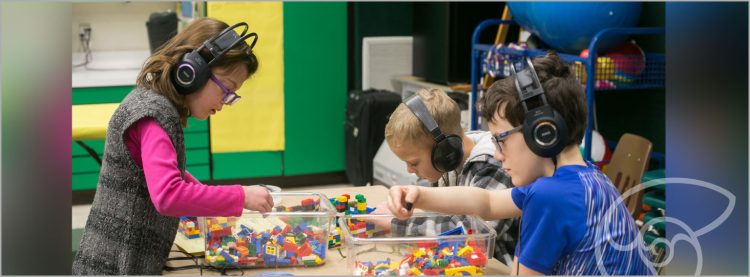
For nearly twenty years, Occupational Therapist Pinky Parekh has used The Listening Program in school and clinical settings with children who struggle to stay regulated, engaged, and available for learning. Many of the students she supports arrive overwhelmed by sound, movement, and classroom demands. Long before reading instruction begins, their nervous systems are already working hard to cope.
What Pinky and her colleagues notice first, once TLP becomes part of a student’s routine, is a shift in regulation.
Students become calmer. Transitions grow easier. Emotional reactions soften. Children who once struggled to sit, listen, or follow directions begin doing so with less effort. The classroom feels more organized, not because expectations change, but because students are more settled in their bodies. As that regulation takes hold, learning begins to unfold more naturally.
Teachers observe students spending more time happily focused on reading and writing tasks. Participation increases. Attention becomes more consistent. Children who once avoided language-based activities begin engaging more willingly. Over time, academic confidence grows alongside emotional stability.
Pinky shared how one of her students had been unable to tolerate classroom noise or sustain focus long enough to participate in lessons. After several weeks of daily TLP listening, he was able to sit through instruction, follow directions, and engage more comfortably in reading, math, and group activities. The change was noticeable across academic, social, and emotional settings.
Pinky often describes The Listening Program as a foundation that supports everything else students are asked to do. When the nervous system is regulated, the brain has space to organize language, attention, and meaning. Learning no longer feels like something the body has to fight against.
As she reflects on her work, Pinky comes back to the same realization again and again:
“The most meaningful change was not just what Maddie could do. It was how reading felt. Her brain was no longer fighting to stay regulated. Learning finally had room to happen.”
This is the pattern she has seen year after year. Not a quick fix. Not a single strategy. But a shift in readiness that changes what becomes possible.
When regulation comes first, reading has room to grow.
Creating the Conditions for Learning
Throughout his work, Alan Heath reminds us that reading is as much emotional as it is cognitive. When the nervous system feels calm, safe, and organized, the brain can sustain attention, make meaning, and stay curious. When it feels overwhelmed, higher learning systems step aside, and protection takes over. The difference between those two states often determines whether reading feels inviting or exhausting.
This is why regulation matters so deeply. Emotion drives attention. Calm supports memory and focus. When the body is organized, the mind becomes available for language and understanding.
Across this Reading and the Brain series, we have explored how The Listening Program supports these conditions. Through structured, rhythmically organized music, it helps the brain regulate, align auditory pathways, and create the readiness that learning requires. It is not a reading activity, but a foundation that allows reading to take hold with greater ease.
When the brain is ready to listen, reading can become an experience of connection, meaning, and confidence.
Continue the “Reading and the Brain” Series
This post is part of the Reading and the Brain series, a deeper exploration of how listening, rhythm, and regulation support reading and learning over time.
Earlier in the series:
How Listening Shapes the Path to Literacy
Introduces the sensory and neurological foundations of reading and dyslexia, exploring how listening shapes the brain’s readiness for language.
Explores the role of rhythm and movement in reading development, highlighting how timing and coordination support attention and fluency.
Webinar Replays
Reading and the Brain: Unlocking the Sensory Foundation of Reading and Dyslexia
A full-length conversation exploring listening, regulation, and reading development
Bonus Session: An extended discussion with additional insights and audience questions
About our Guest Expert
 Alan Heath is the founder and director of Learning Solutions, a UK-based organization that helps individuals with learning differences and sensory processing challenges through movement, neurological integration, and evidence-informed strategies. A respected Sensory Psychologist, Alan brings more than 25 years of experience in bridging brain science with real-world application. He has presented at leading educational conferences across the UK and internationally, and trains professionals in sensory processing, auditory integration, bilateral coordination, and reflex development. Since 2002, Alan has served as the International Representative for Advanced Brain Technologies, supporting the growth of The Listening Program across the UK, Ireland, and the UAE.