


Many bright and capable children work harder at reading than anyone realizes. They listen carefully, practice consistently, and still find that letters and words don’t come together as smoothly as they should. For parents and professionals, it can be confusing to see so much effort without steady progress.
Reading Begins with Listening
What neuroscience now shows is that reading depends on far more than vision or vocabulary. It grows from the way the brain listens. Long before a child can decode words on a page, their brain must learn to process timing, rhythm, and pitch, the building blocks of spoken language. These listening skills create the foundation for fluent reading, comprehension, and expression.
In a conversation with Alex Doman, sensory psychologist Alan Heath shared how his work over the past 25 years has revealed the deep connection between listening, regulation, and literacy. Alan has supported countless children with dyslexia, auditory processing challenges, and sensory integration needs. His perspective reframes reading not as a single skill to be taught, but as an integrated brain function that depends on the health and harmony of multiple sensory systems working together.
“Reading isn’t just about decoding,” Alan explained. “It’s about everything underneath it — auditory processing, sensory organization, and emotional regulation.”
The Connection Between Listening, Regulation, and Literacy
This first article in the Reading and the Brain series explores how these foundational systems shape reading ability and how The Listening Program®, a neuroscience-based music listening therapy, helps strengthen them. By understanding how the brain listens, we begin to see why true reading progress starts from within.
What’s Beneath the Surface When Reading Is Hard

When a child struggles with reading, it is natural to focus on words, sounds, and practice. Yet many of the most persistent challenges are not about effort or instruction. They reflect how the brain processes and organizes information.
Alan Heath often describes reading as the visible outcome of many invisible systems working together. Beneath the surface of fluent reading lies a network of sensory and auditory functions that allow the brain to recognize sound patterns, link them with symbols, and retrieve meaning almost instantly. When even one part of that system develops more slowly, reading can feel like work instead of flow.
What parents and professionals often notice first is that these children tire easily when reading aloud. They may forget what they have just read or lose track of their place on the page. The reason is rarely a lack of attention or motivation. It is timing. The brain is working just a few milliseconds behind the sound, trying to process one word while the next is already arriving.
“The nervous system tells us the whole story,” Alan said. “When we strengthen regulation and listening, everything else becomes more available to the child.”
Building a Foundation for Real Progress
In this light, reading difficulties become less about intelligence and more about the brain’s need for balance and coordination. The foundation of reading lies in sensory organization, rhythm, and emotional regulation, which support the higher-level skills of focus, language, and comprehension. When we support those systems first, reading instruction finally has something solid to build upon.
Introducing The Listening Program

When we think about helping a child learn to read, we often envision lessons, books, and practice. Yet before those skills can develop, the brain must first learn to listen with precision. Listening is not simply hearing. It is the ability to detect, organize, and interpret the fine details in sound. This is where The Listening Program® (TLP) plays an essential role.
A Neuroscience-Based Approach to Sound and Learning
The Listening Program is a neuroscience-based music listening therapy that helps the brain process sound more efficiently. Through carefully engineered recordings of classical and rhythmic world music, TLP provides structured acoustic stimulation that supports the development of timing, pitch perception, and attention. These are the same foundations that strengthen reading and language comprehension.During each listening session, the music gently exercises the auditory pathways, guiding the brain to recognize sound patterns with greater accuracy. Over time, listeners often show improvements in focus, communication, and reading fluency. For some children, listening becomes easier and words begin to flow together with less effort.
Creating the Readiness to Learn
More than twenty years of clinical experience and research have shown that specific types of music can activate neural networks involved in attention, language, and emotional regulation. The Listening Program builds on this science to help the brain form stronger connections for learning.By supporting how the brain listens, TLP strengthens the foundation for how the brain reads. It helps create a state of readiness where comprehension, memory, and expression can thrive.
Early Changes and Real-Life Outcomes
For many children, the most meaningful changes begin quietly. A parent notices their child sitting longer at homework time, remembering more of what they read, or responding more calmly when faced with something challenging. These early signs of organization and focus are often the first indicators that the brain is beginning to process sound and sensory input more efficiently.
Alan Heath explains that these subtle shifts reveal the nervous system’s readiness for learning.
“When a child feels calm and organized, the brain can direct its energy toward learning instead of managing stress.”
Preparing the Brain for Learning
Based on his decades of clinical experience, Alan describes this as the preparatory phase of transformation. Initially, the music helps the brain establish rhythm and balance, enabling it to remain centered long enough to engage in more complex thinking. He often compares this to tuning an instrument before playing a song. If the brain’s systems are not synchronized, no amount of practice will produce harmony. Once they are, learning becomes not only possible but enjoyable.
A Story of Progress: Mason’s Experience
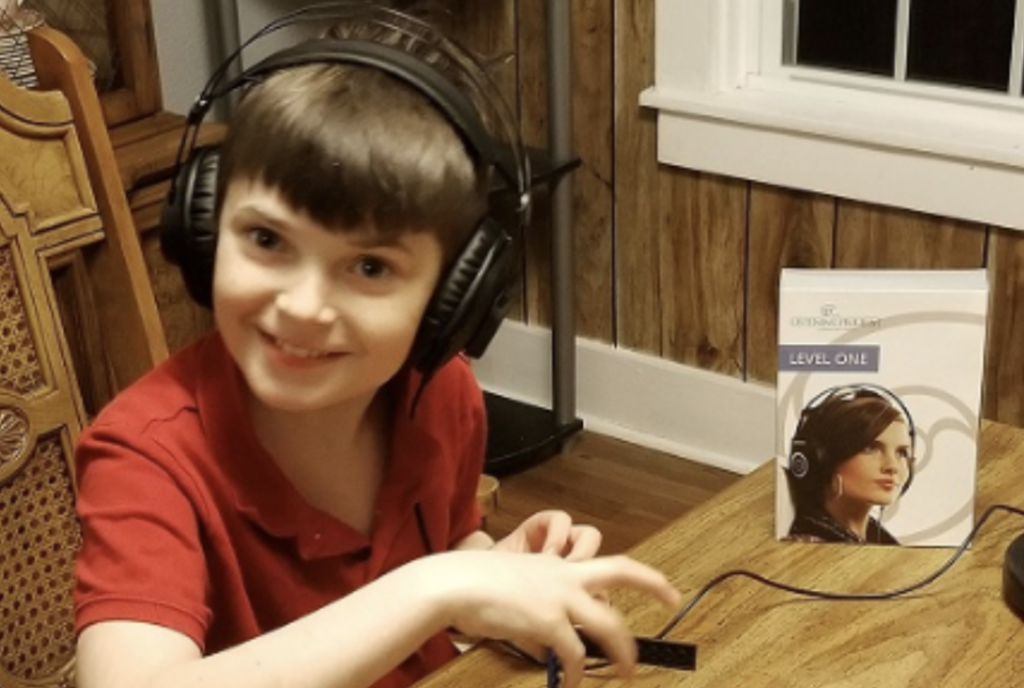
“Thank you to the people who gave me The Listening Program. I went from 91 to 492 then to 600 in reading! I’m also more stable on my bike and I’m focusing a lot more.” Mason had amazing gains in reading, speech articulation, and he isn’t stuttering anymore!
This pattern can be seen in Mason’s progress. During his first weeks of The Listening Program, the changes were small but steady. His teacher noticed that he was less restless, his handwriting smoother, and his ability to focus during reading sessions noticeably improved. Over time, those small changes accumulated. His comprehension and fluency strengthened, his stuttering disappeared, and his confidence grew. By the end of third grade, Mason had advanced from below grade level to reading above expectations.
Alan often describes this progression as moving from regulation to integration. The Listening Program’s carefully structured music trains the brain to recognize timing, pitch, and spatial cues with greater precision. As these auditory pathways become more efficient, they free cognitive resources for language, memory, and comprehension.
“The auditory system is not just about hearing,” Alan said. “It is about how the entire brain organizes itself. When listening becomes easier, everything becomes easier.”
Redefining What Progress Looks Like
This idea reframes progress itself. Rather than viewing improvement solely through test scores or reading speed, Alan encourages parents and professionals to notice the foundational shifts that occur first: steadier focus, calmer mood, improved coordination, and greater emotional resilience. These are the indicators that the brain is working in sync with itself.
Over time, these underlying changes become evident in measurable ways: a child who once avoided reading now asks to read aloud; one who struggled to stay seated during lessons can concentrate for more extended periods; another begins to understand not just the words but the meaning behind them.
Lasting Change That Continues to Grow
What makes these outcomes so powerful is that they do not fade when the listening stops. The brain retains what it learns. The new neural connections remain active, continuing to support focus, regulation, and comprehension long after the sessions have ended.
Alan often closes his conversations with families by reminding them that reading is a journey of the brain’s growth as much as it is a skill on paper. Each small change reflects something extraordinary happening inside: The brain learning to listen, communicate, and connect with itself in new ways.
Conclusion: A New Way to Understand Reading
When we begin to see reading as a whole-brain process, everything changes. The frustration and fatigue that so many children feel start to make sense, and the path forward becomes clear. It is not about pushing harder or practicing longer. It is about supporting the systems that make learning possible, including listening, rhythm, timing, and regulation.
Progress Begins with Balance
Alan Heath’s work reminds us that progress often begins long before we notice higher test scores or improved fluency. It starts the moment the brain finds balance. As listening sharpens and the nervous system calms, the mind becomes more receptive to new learning. Reading becomes less about effort and more about connection, the link between sound and symbol, music and meaning, thought and expression.
“When we strengthen how the brain listens, we strengthen how the brain learns,” Alan said.
Strengthening the Foundations for Learning
The Listening Program provides a way to nurture those foundational abilities, offering the brain the stimulation it needs to organize itself more efficiently. Mason’s story is one of many that demonstrate how these changes unfold quietly at first, then steadily, until the child who once struggled begins to thrive.
The next article in this series will explore how rhythm and movement influence the developing brain and why these physical elements are essential for fluent, confident reading.
For those who wish to experience the full conversation between Alan Heath and Alex Doman, you can watch the Reading and the Brain webinar replay here:
Watch the full discussion
Reading and the Brain with Alan Heath and Alex Doman.
 Alan Heath is the founder and director of Learning Solutions, a UK-based organization that helps individuals with learning differences and sensory processing challenges through movement, neurological integration, and evidence-informed strategies. A respected Sensory Psychologist, Alan brings more than 25 years of experience in bridging brain science with real-world application. He has presented at leading educational conferences across the UK and internationally, and trains professionals in sensory processing, auditory integration, bilateral coordination, and reflex development. Since 2002, Alan has served as the International Representative for Advanced Brain Technologies, supporting the growth of The Listening Program across the UK, Ireland, and the UAE.